
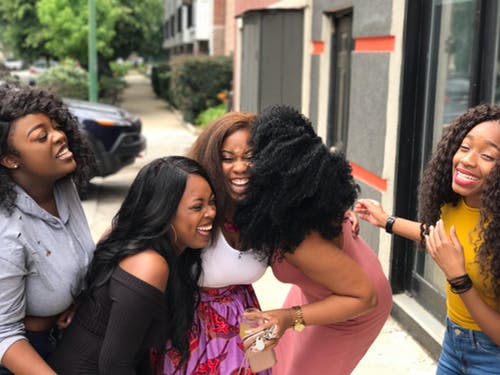
Every year my Women’s Interactive Network come together for an annual leadership conference. It is there that we gather together with other women to help them know, grow, and show their value in business. We also challenge one another, hear teaching from our amazing founder and executive jewel, and walk out equipped to lead wherever God has planted us. I was recently asked to author a feature article as a guest blogger on the group’s website to share my excitement about the upcoming event. I was lead to prepare a book review of one of my favorite inspirational books, In the Company of Women by Dr. Brenda Hunter. As I prepare for my power packed weekend of endless love, support, training, and education, I am truly inspired to continue building friendships and mentoring other women, as one of my greatest satisfactions comes with seeing women practicing new skills and developing themselves personally and as professionals while supporting each other to deliver their best performance. I hope you will join me in adding this great read to your growing library collection.
Five Ways to Empower from In the Company of Women
In the Company of Women by Dr. Brenda Hunter is a precious read that can be used as a daily guide to help its reader turn each chapter’s probing questions into a comprehensive dynamic on how we as women can build and nurture relationships that will enrich our lives. Dr. Hunter is a psychologist who works almost exclusively with women. She believes in the power of female bonds to suppress loneliness and realize the need to strengthen and deepen connections with our mothers, daughters, sisters, and friends for their psychological well-being. Dr. Hunter addresses the key issues involved in developing these relationships that can be thoughtfully integrated into our lifestyle. Each chapter offers a practical tip to guide us with answering a few necessary questions, such as: What can I do to develop friendships and be a better friend? or How can I learn to be a nurturing mother if I wasn’t nurtured as a child or if my own mother lives far away? or What is the best way to handle conflict in friendships? or How do I handle the death of a friendship? Below are five topics from the book on ways to empower other women that we should plan to adopt.
1) The Necessary Company of Women
Women need other women to come alongside and speak their language. We shape each other’s attitudes and self-definitions as we converse. We learn what it means to be female. Women’s relationships are often viewed as gossipy or juvenile, when in reality our lives are richer and our physical and mental health better with having each other present. Marriage does not meet all of women’s emotional needs, although we need our husbands and the rudiments they bring to our lives. Mature women are especially needed to give advice about children, marriage, life, or structuring our time.
2) Women and Friendship
Friendship is essential to women. It’s one of the things we do best – it comes naturally. Women are better at friendships than men as we disclose more weaknesses and vulnerabilities; and our connection is based on intimacy. We’re more inclined to talk, visit, and just be together. Men are the complete opposite and don’t have a need for talk rather they just “do” things together. Our friends often act as buffers against stress and listen to problems and concerns making us feel better. When we see our friends at least every two to three weeks, we can better handle the stresses of life’s transitions. Married women are far more likely to be happier in their marriages when they have close friends to talk to as it puts less stress on the husbands. Moreover, we’re able to spread our needs around more and get both male and female perspective in our difficulties.
3) Key Players and Second Stringers
In order to have a sufficient team of friends, we need key players and second stringers in our playing field. A key player is your closest or best friend. A second stringer is your other friend or companions who share hobbies or a special interest. We have different levels of friendships in life. No one friend can supply all we need. Just as a husband cannot share all our interests or meet all our emotional needs, no one female friend can be all things to us. If we limit ourselves to one or two friends, we may miss the richness that a variety of friends can offer. In addition to key players and second stringers, we have serendipitous friends. These are women who enter our lives though we do not choose them. They enter our lives and form friendships that surprise us and enlarge us by their presence. And we are glad they came.
4) The Art of Friendship
Friendship requires thoughtfulness and effort. There are extroverts whom surround themselves with people and introverts who seek out just a few deep friendships. If you are shy or have been rejected, it is important to have faith that good friends can be made in time and have the courage to reach out. Turning strangers into friends is what friendship is all about. There are nine practice tips on how to do so. 1) First, we have to meet them; 2) Hone communication skills; 3) Learn to listen deeply; 4) Ask good questions; 5) Practice unsolicited acts of kindness; 6) Be conscious of reciprocity; 7) Keep commitments; 8) Be comfortable in your own skin; and 9) Keep practicing.
We need to pursue our own interests. We will be happier and more fulfilled if we are chasing our dreams and snaring them rather than waiting for someone to come along and validate our worthiness.
5) Mentors: Passing the Torch
A mentor befriends, teaches, and inspires. Webster’s defines a mentor as a “trusted counselor and guide.” We must be susceptible to receiving information and be susceptible to giving information. Our mentors are necessary in the workplace, during life transitions, in the home, at church, or even in business. Mentors teach us how to be mothers, wives, daughters, and friends. It is they that teach us how to become mentors ourselves. The rewards of mentoring prepares us for an emotionally rich old age of integrity, success, and fulfillment. Mentoring is a necessary development task for the mentor and a gift to the protégé. We as women, not only give something back, but we experience rich friendships and fill our lives with meaning and purpose.
By breaking down each chapter on how we best develop our relationships, Dr. Hunter shows how making a connection can be as simple as picking up the phone to call someone you haven’t spoken to in a few months and as organic as being curious and asking a potential friend some questions. It’s important that we look beyond what sociologists say draw us together: social class, education, lifestyle. While these factors operate in most of our friendships, they shouldn’t be used to exclude people who might enrich our lives.
Let’s plan to create a few of those serendipitous friendships in the coming weeks. See you at WIN.
 glamour curls on the go